
Quick Answer
Disconnect the opener, lift the door to waist height by hand, and let go. A properly balanced door stays put. If it drifts upward or drops down, the springs are out of balance, and your opener has been doing extra work it was never designed for. That extra strain wears out drive gears, capacitors, and motors years before they should fail.
Why Balance Matters More Than People Think
Garage door openers are built to nudge a balanced door, not to lift its full weight. A standard double garage door can weigh well over 100 pounds, and the torsion or extension springs are supposed to carry nearly all of that load. When springs lose tension or stretch unevenly, the opener's motor takes over the work the springs used to do.
That shows up as a chain of small failures: the drive gear inside the opener strips faster, the capacitor that powers the motor burns out sooner, the logic board runs hotter than it should, and the whole unit groans and struggles to open a door that used to lift smoothly. Homeowners usually notice the opener first, replace it, and then wonder why the new one starts struggling within a year. The real problem was never the opener.
In this area, spring tension drifts for a few predictable reasons: summer humidity swells wood-frame garages and doors, pine sap and moisture collect around hardware and tracks, and winter cold snaps and the occasional ice storm stiffen springs and add weight if ice forms on panels. None of that is dramatic on its own, but it adds up to springs that slowly fall out of balance.
Tools You Need
- A step ladder
- Work gloves
- A flashlight
- A helper (optional, but useful for watching the door from a distance)
How to Test Garage Door Balance, Step by Step
- Close the door completely. Start from a fully closed position so you have a consistent baseline.
- Disconnect the opener. Pull the red emergency release cord hanging from the trolley. This detaches the door from the opener arm so you're testing the springs alone, not the motor.
- Lift the door by hand to about waist height. Go slow and use both hands evenly on the bottom panel.
- Let go and watch closely. A balanced door stays exactly where you leave it, maybe drifting an inch or two. If it floats upward on its own, the springs have too much tension. If it drops or slams down, the springs are too weak or worn.
- Test at a second height. Lower the door back down, then repeat the lift at roughly chest height. Confirming balance at two points rules out a fluke reading from one spot on the track.
- Reconnect the opener. Pull the release cord again (or follow your opener's manual) to re-engage the trolley before using the door normally.
What a Homeowner Can Safely Do
This entire balance test is safe for a homeowner to run, since it only involves manually lifting the door with the opener disconnected. You can also do a visual check while you're in there: look for frayed cables, rust on the springs, or gaps where the bottom seal has pulled away from the pine trim, a common issue after a wet summer. Lubricating rollers and hinges with a garage-door-specific lubricant is also fine to do yourself.
What Needs a Technician
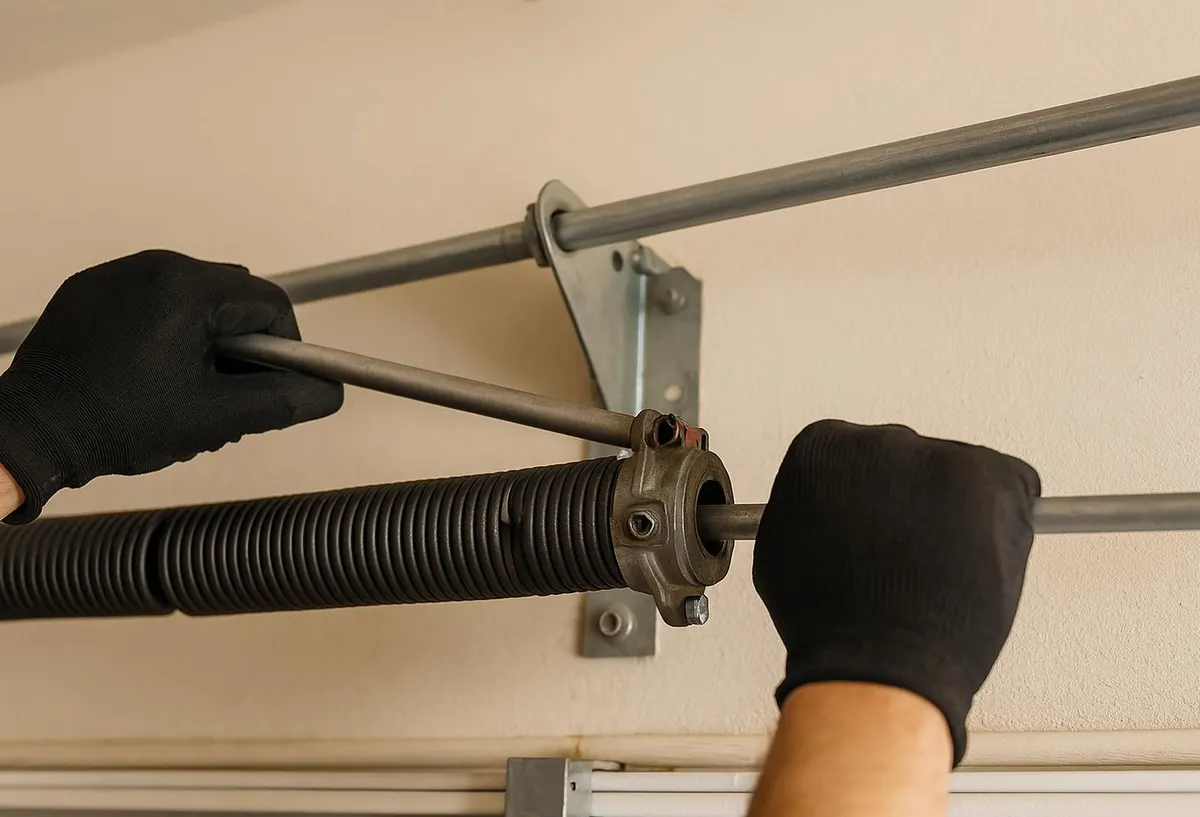
Adjusting spring tension is not a homeowner job. Torsion springs are wound under extreme pressure, and the winding bars used to adjust them can cause serious injury if they slip. If your test shows an imbalance, the fix is a tension adjustment or a spring replacement, both of which require the right tools and training. Cable fraying, bent tracks, and any issue involving the springs themselves should go straight to a professional.
When to Call Suwanee Garage Door
If your door failed the balance test, or if your opener has been straining, reversing unexpectedly, or making a labored grinding sound when it lifts, it's worth having it looked at before winter weather adds more load to the system. Suwanee Garage Door handles Spring Replacement and Garage Door Maintenance for homes throughout the area, including full tension adjustments, cable inspection, and track alignment checks, so the opener goes back to doing light duty instead of heavy lifting.
If you're in Suwanee, Duluth, Buford, Lawrenceville, Johns Creek, Sugar Hill, Dacula, or Cumming and your garage door isn't sitting right when you let go of it, give Suwanee Garage Door a call before the next cold snap puts more strain on your springs and opener.